
Brown Stink Bugs
The brown marmorated stink bug (also called BMSB) has been established in the eastern United States since the mid-1990s and then came to the Pacific Northwest in 2004. Over the past couple of decades this invasive insect has continued to expand from Portland Oregon and worked its way up into the Seattle area. Like a lot of invasive pests, the BMSB has found a niche in our ecosystem where it can survive extremely well without being kept under control by native predators.
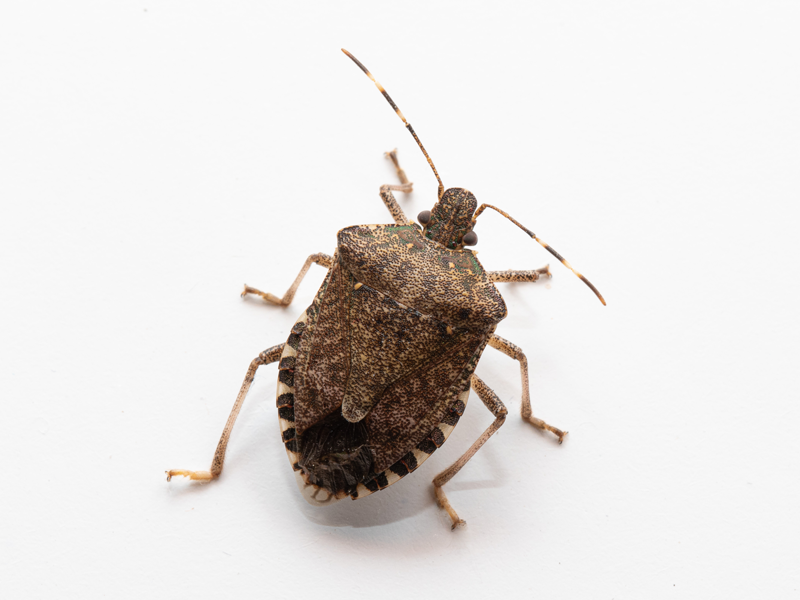

WHAT ARE WASHINGTON BROWN STINK BUGS?
The BMSB is an extremely invasive pest and can feed off of a wide range of fruit bearing trees and plants. Many of these plants can be found in your backyard or garden. This insect reproduces quickly and develops into large numbers. As the population numbers build at the end of the summer and cooler weather starts to kick in, the stink bugs focus on trying to survive through the winter by moving inside the walls and attics of homes. When the BMSB moves into a house, sometimes by the thousands, it can drive homeowners crazy. If crushed, the stink bugs release a foul-smelling material and that can stain curtains and other fabric.

WHY ARE BROWN STINK BUGS IN MY HOUSE?
Stink bugs are considered a nuisance pest and they do not cause any actual structural damage or harm people. This is similar to other “overwintering” insects, like flies and ladybugs, that move into homes to avoid the colder weather in the fall. If a large number of stick bugs attempt to hibernate inside your home’s wall and attic, some of them will incidentally travel through the voids into the living areas of your home. If this migration happens in the fall, then you can also anticipate seeing them when they wake up around February and March. It is common for stink bug populations to return each year to the same house and consistently become an issue unless a plan is developed that addresses why your home is seeing large numbers of them.
When overwintering insects wake up, they are drawn to daylight. They instinctively want to go outside but the cold air redirects into the living areas of a home. In the early spring, the sun may warm up the southern side of a home even if it is still cold outside. This prematurely wakes up the insects from hibernation and rather than going outside they are drawn further into your home.
HOW DO YOU EXTERMINATE STINK BUGS?
The best treatment options for BMSB is to trap them using either insect light traps in the attics or to sticky traps placed around the inside of the windows sills. You can also vacuum them up, but when you do this be sure to throw away the vacuum bag or they will just work their way back out. Caulking around window and door frames can also help reduce the number of insects that emerge from the wall voids into the living areas. Spraying for the stink bugs inside a home is generally NOT successful as they are a strong insect that can endure most insecticides. If spraying is done outside in the fall, prior to them moving into the home’s walls, some impact can be made on the population numbers, but the timing has to be almost perfect. Non-chemical treatment methods for most overwintering insects tends to be the most effective approach.
If you are seeing large numbers of the brown marmorated stink bug, or other insects, inside your home during the late fall and early spring please let us know. Developing a solution to address them might be simple and if you are able to interrupt their annual cycle you could avoid them from plaguing you every fall and spring.

Let’s Get Rid of What’s Bugging You
If you are tired of dealing with ants in the kitchen, rats in the walls, or just want peace of mind that your home is protected, get in touch with us.